
Author Desiree Cooper on her new book, “Black Summers: Growing up in the Urban Outdoors”
Clip: Season 11 Episode 16 | 6m 32sVideo has Closed Captions
The anthology explores the struggles and joys of African Americans navigating summer fun in Detroit.
Contributor Stephen Henderson of American Black Journal catches up with award-winning author and journalist Desiree Cooper to talk about her new book titled, "Black Summers: Growing up in the Urban Outdoors." It explores the experiences of Black Detroiters navigating summer fun in the city's public spaces. Several Detroiters contributed to the anthology, including Henderson.
Problems playing video? | Closed Captioning Feedback
Problems playing video? | Closed Captioning Feedback
One Detroit is a local public television program presented by Detroit PBS
Author Desiree Cooper on her new book, “Black Summers: Growing up in the Urban Outdoors”
Clip: Season 11 Episode 16 | 6m 32sVideo has Closed Captions
Contributor Stephen Henderson of American Black Journal catches up with award-winning author and journalist Desiree Cooper to talk about her new book titled, "Black Summers: Growing up in the Urban Outdoors." It explores the experiences of Black Detroiters navigating summer fun in the city's public spaces. Several Detroiters contributed to the anthology, including Henderson.
Problems playing video? | Closed Captioning Feedback
Where to Watch One Detroit
One Detroit is available to stream on pbs.org and the PBS app.
Providing Support for PBS.org
Learn Moreabout PBS online sponsorship(light music) - I, of course, love this anthology, and you and I have talked about it now for a very long time.
But I don't think I know the answer to the question about how you came up with this as an idea, this idea of summer, summer in Detroit, and the experiences that we as African Americans have that are very distinct from other folks here in Detroit in the summers.
What sort of piqued your curiosity here about this subject?
- Yeah.
So the book is dedicated to the memory of Sarah Elizabeth Ray.
And she was the woman that not many Detroiters know about.
She integrated the Bob-Lo boat.
So that iconic summer experience for Detroiters, the Bob-Lo Boat, people remember being there with family, with people from all walks of life, it being integrated.
Well, it wasn't always the case.
And in 1948, she won a US Supreme Court decision that opened up the Bob-Lo boat for everyone.
And so part of me, I had been doing a lot of work around her history and telling her story.
And I just sort of had this question of, you know, what if she was around now?
You know, how would she feel about the liberties and the freedoms that we are experiencing now compared to 1948?
Well, I shouldn't say now because it's a little precarious now.
- Right.
We're not sure.
We're not sure, right?
(chuckles) - But to my point, or would she say, "Wow, I would've thought we would've come further," or "I would've though things would be much more different."
And so I said, "Why not ask current Detroiters about what their core summer memories are or experiences are, and how it's shaped by race still today?"
- Yeah.
Yeah.
One of the things about this collection that I think is really important to note is like all things Black, it represents this incredible breadth of experience, of emotion of though and understanding.
It's not one thing, it's not many things, it's all things.
And there's something, I think, kind of intrinsic about the African-American experience and noting that it is all things rather than, you know, a set of things or one things, which I think is, it too often gets reduced to that.
- Right, and I did, you know, I reached out and got writers who were 16, teenagers when they started.
This was a three-year project, so people aged out of those groups during the process.
And I think the oldest writer was 74 at the time when they offered the essay.
So I purposely tried to get a range in terms of that, in terms of geography.
And I will agree with you that everyone brought their own lives to the table, right?
But at the same time, there is this, the specter of race that is common.
And then their reactions were individual, you know, and how it played out for them in their lives as individual.
So one of my hopes was exactly as you're saying and that is that across the nation, people can read a book like this and find themselves in it, no matter who they are.
They can remember bike riding in the summer or the pools in the summer or the fishing in the summer.
But there's also going to be aspects of it that they'll say, "I never thought of," or that they will feel validated that their summer experiences, which haven't really been widely portrayed or are not part of that usual nostalgia around summer are included in these pages.
- Yeah.
Yeah.
The aspect of memory here, I think is also really really key.
The way that for us as African Americans memory plays a different role often in our lives in terms of how we come to the places we are or how we think of the world.
That's another theme that I think is so strong in the book.
- Steven, when I came to you and I said, "I have this idea and I'm wondering if you would be willing to contribute," you did not hesitate.
And you know what you said to me?
You said, "I have a story that I've always wanted to tell.
And I've never told.".
- Mm-hm.
Mm-hm.
- So get the book and hear the story that Steven has been holding in.
But I will tell you this much about that story.
That it explores what racial trauma does to a person, especially when they meet it out of nowhere as a child.
And I do feel that in this day and age, when we have now sort of been re-traumatized in real time with Black Lives Matter, with you know, the protest in Minnesota and ICE, we are seeing, we're horrified by these things.
And many people are saying, "I can't watch anymore.
I feel traumatized."
Well, dial it back, right, to the pre-civil rights era or before the rebellion in Detroit or during the rebellion in Detroit.
And one thing that I realized is that Detroit had a trauma that we have not quite... We don't, we don't talk about it as trauma.
And so of course it hasn't healed.
- Right.
- So there may be an aspect of that too, and I appreciate you sharing a story that really helps us open that up.
 New
Arthur Horwitz: The memoir of a second-generation Holocaust survivor
Video has Closed Captions
Clip: S11 Ep16 | 10m 40s | The book details aspects of his life, including the impact of being the son of a Holocaust survivor. (10m 40s)
 New
Video has Closed Captions
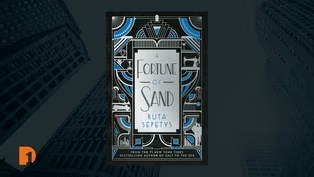
Clip: S11 Ep16 | 5m 14s | “A Fortune of Sand” is a drama set in 1920s Detroit when the automobile industry was booming. (5m 14s)
Providing Support for PBS.org
Learn Moreabout PBS online sponsorship New Episode
- News and Public Affairs

Top journalists deliver compelling original analysis of the hour's headlines.
 New Episode
- News and Public Affairs

Today's top journalists discuss Washington's current political events and public affairs.
 New Episode
 New Episode
 New Episode
 New Episode
 New Episode



 New Episode
 New Episode


Support for PBS provided by:
One Detroit is a local public television program presented by Detroit PBS