
The Political Rewards for 'Tough on Crime'
Candidates in the 1988 presidential election debate their stances on crime and punishment.
From
The Political Rewards for 'Tough on Crime'
Clip: Episode 4 | 3m 49sVideo has Closed Captions
Candidates in the 1988 presidential election debate their stances on crime and punishment.
Crime and punishment takes centers stage as a topic of debate in the 1988 presidential election. The Republican nominee, George H. W. Bush, paints his opponent as soft on crime, citing the example of Willie Horton, a man who committed a heinous crime while on a weekend prison pass. This ad resonates with voters and politicians alike, shaping public perception of crime and incarcerated people.
From
Problems playing video? | Closed Captioning Feedback
Problems playing video? | Closed Captioning Feedback
Episodes presented in 4K UHD on supported devices. Major funding for CRIME AND PUNISHMENT IN AMERICA was provided by The Atlantic Philanthropies, Emerson Collective, The Andrew W. Mellon Foundation, and...
The Political Rewards for 'Tough on Crime'
Clip: Episode 4 | 3m 49sVideo has Closed Captions
Crime and punishment takes centers stage as a topic of debate in the 1988 presidential election. The Republican nominee, George H. W. Bush, paints his opponent as soft on crime, citing the example of Willie Horton, a man who committed a heinous crime while on a weekend prison pass. This ad resonates with voters and politicians alike, shaping public perception of crime and incarcerated people.
From
Problems playing video? | Closed Captioning Feedback
Where to Watch Crime and Punishment in America
Crime and Punishment in America is available to stream on pbs.org and the PBS app.
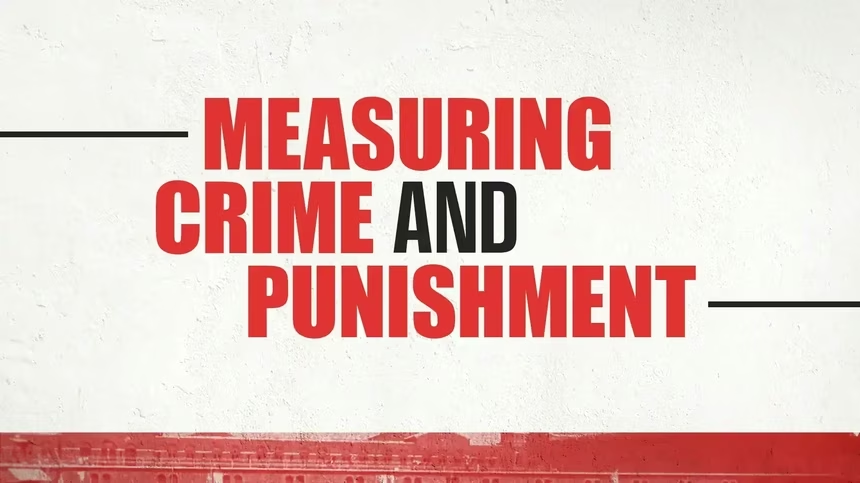
Measuring Crime and Punishment
How does the way we collect and measure crime shape our understanding of it? Crime statistics can tell us how crime changes over time. But the way crime is measured, defined, and communicated can also shape public perception and policy.Providing Support for PBS.org
Learn Moreabout PBS online sponsorshipGood evening.
On behalf of the Commission on Presidential Debates, welcome to the second presidential debate.
The candidates are Vice President George Bush, the Republican nominee... [Applause] and Governor Michael Dukakis, the Democratic nominee.
[Applause continues] The first question goes to Governor Dukakis.
You have two minutes to respond.
Governor, if Kitty Dukakis were raped and murdered, would you favor an irrevocable death penalty for the killer?
No, I don't, Bernard.
And I think you know that I've opposed the death penalty during all of my life.
I don't see any evidence that it's a deterrent.
And I think there are better and more effective ways to deal with violent crime.
We've done so in my own state.
Bush: Well, a lot of what this campaign is about, it seems to me, Bernie, goes to a question of values.
And here I do have, on this particular question, a big difference with my opponent.
You see, I do believe that some crimes are so heinous, so brutal, so outrageous, and I'd say particularly those that result in the death of a police officer, those real brutal crimes, I do believe in the death penalty... Narrator: George H.W.
Bush's stance on the death penalty resonated with most Americans, and after the debate, he continued to attack Dukakis for being soft on crime.
Ad narrator: Bush and Dukakis on crime: Bush supports the death penalty for first-degree murderers.
Dukakis not only opposes the death penalty, he allowed first-degree murderers to have weekend passes from prison.
One was Willie Horton, who murdered a boy in a robbery, stabbing him 19 times.
Despite a life sentence, Horton received 10 weekend passes from prison.
Horton fled, kidnapped a young couple, stabbing the man and repeatedly raping his girlfriend.
Weekend prison passes-- Dukakis on crime.
Betts: One of the real problems with Willie Horton is that he allows us to center a conversation around the most violent actor within a system.
He isn't just Willie Horton, the person who committed the crime.
He becomes a representative of every, you know, Black man in America.
Forman Jr.
: I don't think you can overestimate the impact of the Willie Horton ad for a generation of politicians.
It sent the message that if you exercised any amount of discretion in favor of basic humanity towards somebody who is incarcerated-- giving them the right to parole or giving them the right to a day pass, to go to work, if you did anything like that and a crime was committed and it was a Black person who did it, nothing else that you said or did would be remembered by the populace.
What would be remembered is that you were soft on crime.
And so, this set in motion this bipartisan bidding War for criminal justice harshness.
What are we going to do?
Just let all these hardened criminals go because we don't have the guts to do what's right, to incarcerate them and make them serve the time that they need to serve?
I hope not.
I don't care why someone is antisocial.
I don't care why they become a sociopath.
We have an obligation to cordon them off from the rest of society, try to help them, try to change their behavior.
But they are in jail, away from my mother, your husband, our families.
 New
How Responding to People with Mental Illness Fell to the Police
Video has Closed Captions
Clip: Ep4 | 3m 37s | America's prisons become the nation's largest mental health institutions as other facilities close. (3m 37s)
 New
Perspective from a Prison Guard
Video has Closed Captions
Clip: Ep4 | 5m 59s | Former correctional officers share their experiences working in prisons. (5m 59s)
 New
Video has Closed Captions
Clip: Ep4 | 49s | Reginald Dwayne Betts speaks on the principles and character of those that are incarcerated. (49s)
Providing Support for PBS.org
Learn Moreabout PBS online sponsorship






Support for PBS provided by:
Episodes presented in 4K UHD on supported devices. Major funding for CRIME AND PUNISHMENT IN AMERICA was provided by The Atlantic Philanthropies, Emerson Collective, The Andrew W. Mellon Foundation, and...